Saturday, 30 November 2013

Schloss Bruchsal Update

Just a few small additions to the Post about the Bruchsal Rococo Ball, thank you Michael and Diana!!!

And thank you to everyone who made this day and evening special and fun!
By the way: I noticed on these pictures how awfully modern I was dressed. ;) late 1780s... wohooo.... should have worn my Francaise, but then everybody else would have been wearing their Anglaise-dresses, i guess. ;)

lovely ladies!


into the evening light we were dancing...


I am also an unbelievably fastmoving object!

the end.


All pictures have COPYRIGHT!

Wednesday, 13 November 2013

1750s Riding Habit - Janet Arnold

Let's say it's my "i'm mysterious" look. ;)


After receiving the program for the La Motte Tilly Weekend and reading the words "Hunt" "outdoor games" "Park" I was determined to whip together Janet Arnold's Riding habit (dated 1730s-50s). Luckily, the lovely Mme du Jard had copied and made the pattern previously so I could use her pattern and jacket for fitting purposes and didn't have to scale it up. :) Being a comparable size I didn't need to make many adjustments (again, lucky me...) and have come up with my version of the Riding habit. The original garment can be seen in the snowshill collection HERE.
I've started a collection of pictures of Riding habits in Pinterest, too, just in case: HERE.

I have used very dark blue loden cloth for both the jacket and the skirt (which is worn over small side hoops, rocking horse pattern, and a quilted petticoat). The pockets (which are fully funktional in the original) are just fake. 1. I would only use the hoops 2. I was running out of time. :) I didn't miss them a bit.
 I am also wearing a habit shirt, made from fine white linen, and white cotton scarf (thank you M. Beyschlag!). Out of reasons beyond my control (bad hair day...) I am not wearing a hat, which is nearly inexcusable. Concentrate on the green stockings instead.


green stockings! hunter's green maybe? So in no need of a rifle myself. ;)

here you can see another example of a riding habit with vest. and myself. and a very fine man with his rifle.

Snowshill Collection, Janet Arnold Pattern


Hoping to get some more pictures, too... :)

Sunday, 10 November 2013

Chateau de la Motte-Tilly - 1768


Just a short while ago I had the pleasure of sharing a weekend at the Chateau de la Motte Tilly (you know, the one from "Dangerous Liaisons", ... Glenn Close, John Malkovich, Michelle Pfeiffer, Uma Thurman... oh lala!) with the Association Le Bosquet. Here are some impressions of the stay:
I've been wearing the Chardin Francaise (JPR), the Walpole Francaise (JPR), and a Riding Habit (Janet Arnold). All garments are more 1740s-60s, but still suitable for the late 1760s.


dans le parc du Château de la Motte-Tilly, avec Mme du Jard, black and white ( Walpole Francaise, JPR)


we're going on a bear hunt!!

Walpole Francaise

No bear but a baby on the run!

(C) Coltrane Koh


(C) Coltrane Koh


back view of Chardin Francaise (C) Coltrane Koh

(C) Coltrane Koh

(C) Coltrane Koh


I'm not quite sure...

I LOVE green stockings, Janet Arnold riding habit


you can only see about 1cm2 of it BUT i AM wearing red stockings. ;)


bye bye Chateau de La Motte-Tilly!
Please respect the Copyright of the Pictures


Friday, 1 November 2013

the wolf at the door - a quick and easy draught excluder


It's cold, it's wet and it's definitely getting winter...
This is the first winter in out new home, so we still have to get used to some things. One thing I refuse to get used to is draught (ice-cold!) coming in underneath our front door, from the hallway. Having 50cms of furry, wolfy material and some felt I whipped together a 60mins (at most...) wolf-draught-excluder.


all you need is approx 50cms furry fabric, a bit of red felt for the tongue, a bit of black felt for the nose and the underneath of the tail, a bit of grey (or whatever colour) for the inside of the ears, and 2 buttons for the eyes. And somethings to stuff it - I used scrap fabric loosely stuffed. ;)

wolf draught excluder "pattern"
this is how to cut your 50cms piece of furry stuff. the long thin thing is the tail. you can do it nicely by sewing it, i was lazy and just glued black feld on the wrong side of the fabric. Works just as well. Then I sewed grey felt right on right onto the two "ear-triangles" and turned them to the right side.
From a piece of black felt I folded a trazezoid shaped nose and stiched it together by hand.
Then by machine I sewed the front, side and belly part of the wolf together, leaving the bum area open for stuffing. ;) Then I stitched (by hand) the ears, nose, tongue and eyes on the desired place (longs seam being the belly and thus facing to the floor) and attached to tail to the bottom. Stuff your animal and close the back opening. Finished. Lucy loves him, he's called "Yay".
Have a cuddly winter, now you have a wold on your doorstep, on the right side. I'm sure he'll keep the other ones away.


Thursday, 24 October 2013

1740/50s Chardin Striped Robe a la Francaise

(C) Coltrane Koh

I have been stumbling across stripey 18th century gowns lately and wanting to do something 1750s, I have come up with my 1740/50s striped Chardin Francaise.
It all started with this wonderful gown, a very beautiful late Robe a la Francaise with green stripes. SOOO nice! But not 1750s.

MetMuseum 1780s

Then I came across this picture by Chardin which has been painted in 1741. And what Stripes they are! Of course you can't see much of the gown,  but it's wide stripes- I think the flounces are sticking out of wide winged cuffs. The robe is worn retroussee dans le poches. It really fuelled my imagination! :)


Morgentoilette, Chardin 1741

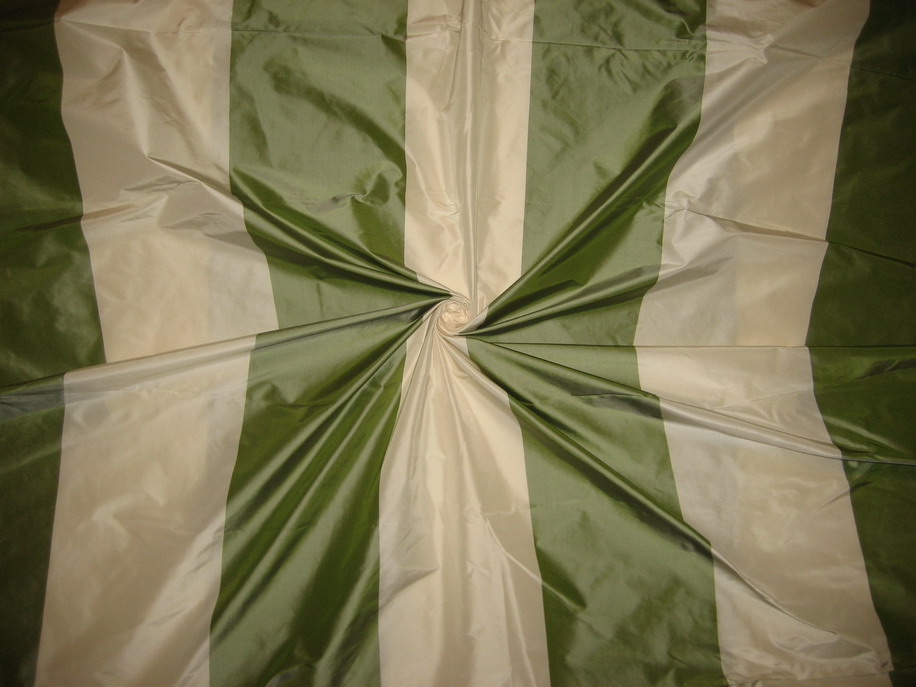
Also Norah Waugh mentions wide stripes as typical for the earlier 18th century in "the Cut of Women's clothes".  And THEN this really wide green and ivory stiped taffeta silks just begged to be made into something. ;)

ivory/seaweed green

The stripes are 20cm/8inches wide, that's quite something, I dare say, that's pretty wild. I have to admit, when ordering the fabric online, 8 inches stripes didn't seem quite as wide as they are, when 10 yards of fabric are spread out in front of you... :) (possibly has to do with being used to the metric system too... 8 inches just doesn't sound quite as big as 20cm!!)
Anyway, I decided to give it a real go. My version has relatively slim sleeves with winged cuffs.
Also I chose to make the petticoat from the same fabric and not a different colour like in the picture.
The robe is worn over side hoops (rocking horse pattern) and a quilted petticoat, and I have once again used JP Ryans Pet-en-l'air/Robe a la Francaise pattern. Still loving it.


Wednesday, 23 October 2013

Anna Maria Garthwaite (1688-1763) - 18th century textile designer

When it comes to choosing fabric for a dress project I am rather reluctant to take risks. Which  means I mostly opt for plain colours as I found you can go SO wrong with a pattern... I mean, you can't take ANY plaid or striped or colour combination, and coming to even more complicated things like floral patterns the possibilities for choosing the wrong kind of style and colour become even more abundant.

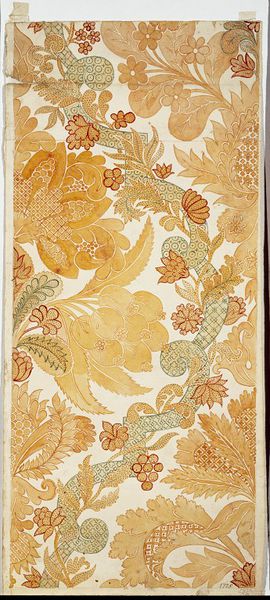
Anyway, I have been stumbling across some fabulous pictures of this English designer from the 18th century and wanted to share it with you.

Garthwaite 1726-28, HOW MODERN IS THIS!!!

Garthwaite 1752

Garthwaite 1726, one of my favourites

Garthwaite 1728


Garthwaite 1751

Garthwaite 1734

Garthwaite at the V&A, search

(above pictures are from V&A)

Pinterest Board Garthwaite

About Anna Maria Garthwaite (from Wikipedia)

Anna Maria Garthwaite (born 14 March 1688 in Leicestershire– October 1763, Spitalfields ) was a textile designer and created beautiful and intriguing floral designs for Spitalfield Silks (damask and brocades). Mainly from the 1720s to 50s. Many of her watercolour and fabric designs (more than 1000!) have survived (see V&A collection), but also pictures of her designs and original garments. (follow the wikipedia link above for more information on her biography)

What I found most astonishing was how incredibly modern some of her graphical work seems. The little trees (first picture above) could have been designed just recently but no, she came up with it about 300 years ago! 300 years!!! The below pictures show a few dresses with designs that are really bold , nearly greometrical patterns. I didn't believe my eyes! She turned from these very stylized designs to more "true to nature" designs which came into fashion in England (picture at the very bottom), while French designers went more stylized.

Mrs Charles Willing of Philadelphia was painted by Robert Feke in 1746 wearing a gown of English silk damask woven to a surviving 1743 design by Anna Maria Garthwaite. ( from wikipedia)


Robe à l’anglaise
Red silk damask
Circa 1775, England
Fabric by Anna Maria Garthwaite, 1751 from:
http://www3.fitnyc.edu/museum/Arbitersofstyle/18thc.dress.htm
 

1740-1750 (woven) 1750-1760 (made) (attributed)  http://collections.vam.ac.uk/item/O85965/banyan-garthwaite-anna-maria/

http://www.mfa.org/collections/object/wedding-dress-worn-by-ruth-eliot-at-her-marriage-to-jeremy-belknap-49492 from after 1751

http://collections.vam.ac.uk/item/O361528/sack-back-gown-anna-maria-garthwaite/ 1752


More about patterns and do's and don't's here: Marquise Stoffmuster